
Summary
Three mechanically different sample extraction methodologies, namely, silica spin columns, phenol-chloroform, and automated magnetic capture of polymer-complexed DNA (via an Automate Express instrument), were compared for their ability to purify nucleic acids from blood culture fluids for use. in TaqMan assays for the detection of Staphylococcus aureus. Extracts from the silica columns required 100- to 1000-fold dilutions to sufficiently reduce the powerful PCR-inhibiting effects of the anticoagulant sodium polyanetholsulfonate, a common additive in blood culture media.
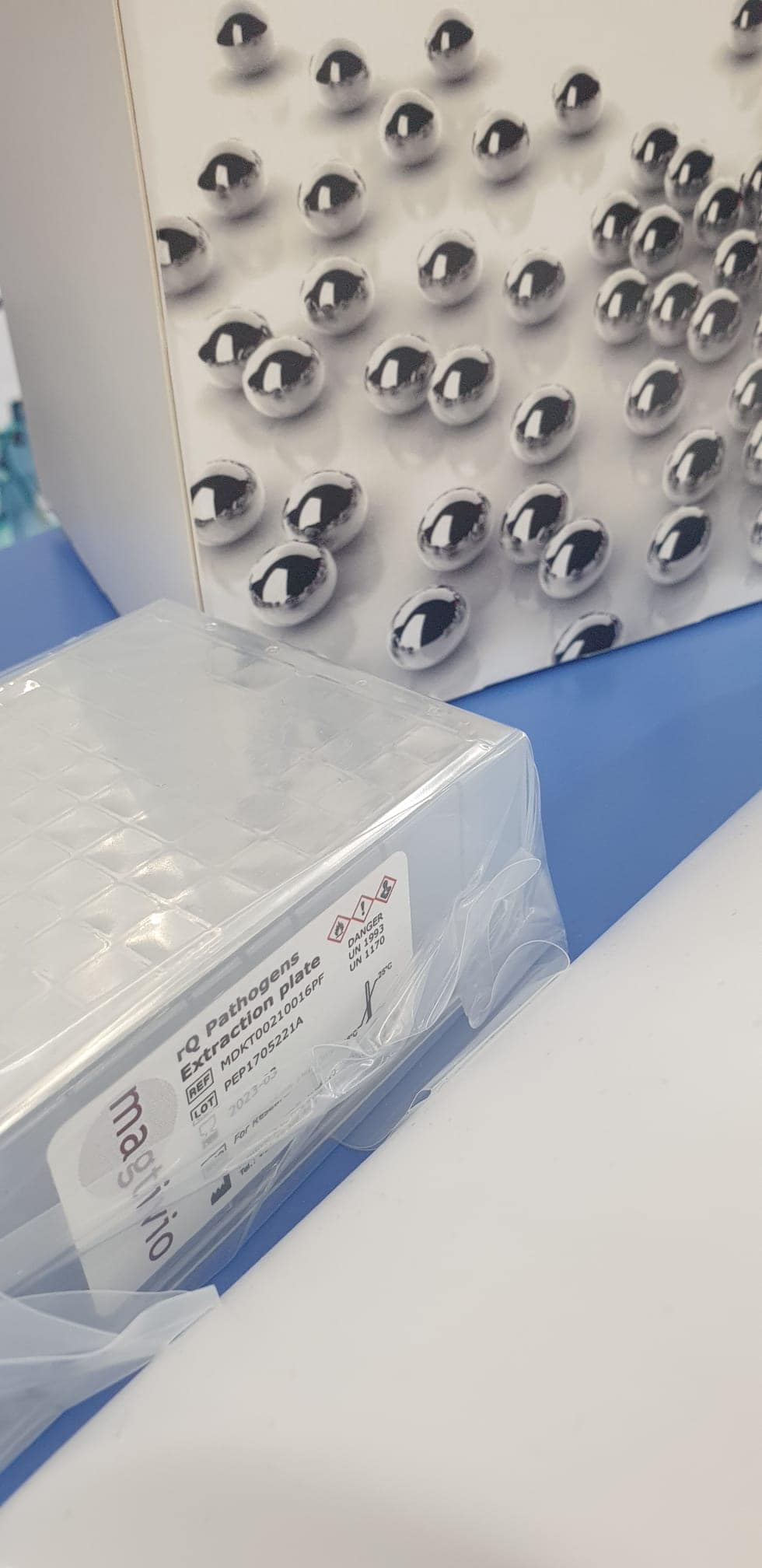
In contrast, samples extracted with phenol-chloroform or the Automate Express instrument required little or no dilution, respectively, allowing an approximately 100-fold improvement in assay sensitivity. Analysis of 60 blood culture bottles indicated that these last two methodologies could be used to detect lower numbers of rQ pathogens extraction plate and that a growing S. aureus culture could be detected 2 hours earlier than when using silica columns.
Of the three methodologies tested, the Automate Express instrument had the shortest time to results, requiring only approximately 80 minutes to process 12 samples. These findings highlight the importance of mechanistic consideration when selecting a DNA extraction methodology, given that certain PCR inhibitors act similarly to DNA in certain chemical environments, resulting in copurification, while other methodologies use different chemistries. They have advantages during the DNA purification. of certain types of samples.
Materials and methods
- Laboratory culture
A frozen glycerol stock of methicillin-sensitive S. aureus from the American Type Culture Collection (12600; ATCC, Manassas, VA) was plated on a Brain Heart Infusion Agar plate (B1010; Teknova, Hollister, CA). and a single colony was planted. selected and inoculated into Brain Heart Infusion Broth (B9993; Teknova) for overnight aerobic incubation at 37 °C.
Colony-forming units (CFUs) per milliliter of the S. aureus culture used in these experiments were determined by creating a 10-fold dilution series in Brain Heart Infusion Broth that was spread into Brain Heart Infusion plates. Colonies were counted after 48 hours at 37°C. The plate count that produced between 10 and 100 colonies was used to back-calculate the CFU/mL of the culture.
- Sample extraction protocols
On separate days, three replicates of each sample aliquots were thawed and processed using the DNeasy Blood and Tissue Kit (69506; Qiagen, Hilden, Germany), phenol-chloroform (15593031; Invitrogen, Carlsbad, CA) or an ABI Automate Express Forensic DNA Extraction System (4441763; Applied Biosystems, Foster City, CA).
- Automate System Express
The PrepFiler Express Forensic DNA Extraction Kits (4441352; Applied Biosystems) cartridges were run on an Automate Express Forensic DNA Extraction System (4441763; Applied Biosystems) equipped with a version 1.5 β protocol card. Samples were lysed using a lysis buffer provided by the kit supplemented with 10 mmol/L dl-dithiothreitol (43815; Sigma-Aldrich) for 40 minutes at 70°C. The manufacturer’s user manual does not recommend treatment with lysozyme or proteinase K, so neither was performed. The Automate Express system generated eluates with a volume of approximately 50 μL.
- Nucleic Acid Concentration Measurements
Samples were analyzed using a NanoDrop 8000 spectrophotometer (Thermo Scientific, Rockford, IL). The concentration of nucleic acids present in each sample was assessed using A260 measurements.
- Standard curves
For the present study, an S. aureus standard was created by purifying nucleic acids from an overnight culture of MSSA (12600; ATCC) using the Automate Express instrument equipped with a PrepFiler Express Forensic DNA Extraction Kit. The sample extract was quantified with a NanoDrop 8000 spectrophotometer and a threefold dilution series was created ranging from 23 FG/μL to 50 pg/μL.